Dr. Lisa Funnell
Award-Winning Author | Media Educator & Consultant | “Dr 007” | Director of Communications, G-Woman Media

Why James Bond Matters in 2026
Why the world’s most famous spy continues to shape how we imagine espionage.
People often ask me why I continue studying James Bond.
It is a fair question. Ian Fleming introduced the character in Casino Royale in 1953, yet more than seventy years later Bond continues to provoke debate. He has been praised as an enduring cultural icon, criticized as a relic of another era, and repeatedly declared irrelevant. Every few years, someone predicts that the franchise has reached the end of its life.
My response is usually another question: Why do we keep watching him?
Or perhaps the better question is this: Why do we keep recreating him?
James Bond has become far more than a successful fictional character. He has become one of the defining cultural reference points for the modern spy genre. Whether audiences celebrate Bond, critique him, parody him, or reject him altogether, they continue to return to him. More importantly, they continue to reinvent him. That persistence suggests we are witnessing something larger than the longevity of a popular franchise. We are witnessing the evolution of a cultural language.
Reinvention Has Always Been Bond’s Greatest Strength
The decision to kill James Bond in No Time to Die appeared, at first, to place the future of the franchise in genuine jeopardy. For the first time in the franchise’s history, Bond did not simply escape another impossible mission. He died.

Yet the response was telling. Almost immediately, the conversation shifted from whether Bond should return to who would become the next Bond. The character’s death did not end the franchise; instead, it renewed public interest in its future.
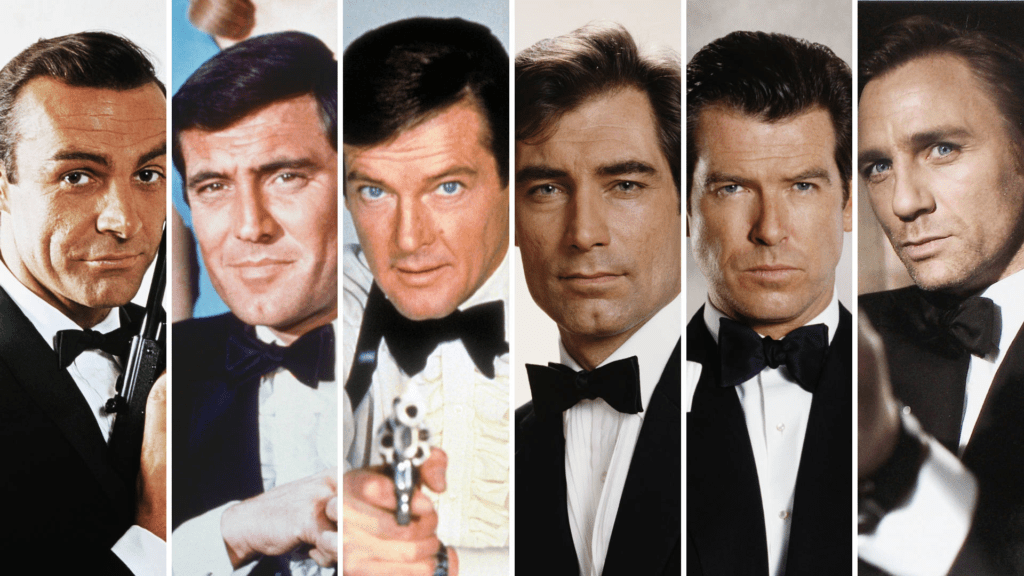
Bond has always been defined by reinvention. His first transformation occurred when Fleming’s literary spy became a cinematic hero through Sean Connery. Every subsequent actor inherited more than the role of James Bond; they inherited the responsibility of convincing audiences that Bond still belonged in the world they inhabited. Roger Moore reflected the escapism of the 1970s. Timothy Dalton returned to Fleming’s harder edge. Pierce Brosnan repositioned Bond after the Cold War, while Daniel Craig reconstructed him for a post-9/11 world marked by uncertainty, vulnerability, and emotional complexity.
Each era has grappled with the same underlying question: Does the world still need James Bond?
We are watching that question unfold once again. Amazon MGM Studios has assumed creative control of the franchise, Denis Villeneuve has been announced as director, and casting director Nina Gold has begun the search for the next Bond. No actor has yet been chosen, yet speculation has become a global conversation. Names such as Jacob Elordi, Callum Turner, and Harris Dickinson dominate headlines, fan forums, and social media.
That level of anticipation is remarkable. Few fictional characters generate worldwide debate before a story has even been written. The fascination is not simply about casting an actor. It is about deciding what James Bond should represent for a new generation.
Bond Has Outlived the World That Created Him
Few fictional characters survive the disappearance of the institutions and historical circumstances that produced them. James Bond emerged from postwar Britain. He was shaped by the anxieties of the Cold War, Britain’s changing place in the world, and Ian Fleming’s imagination. Over the decades, he has survived the collapse of the Soviet Union, the end of the Cold War, globalization, terrorism, the digital revolution, and profound shifts in attitudes toward gender, power, and national identity.
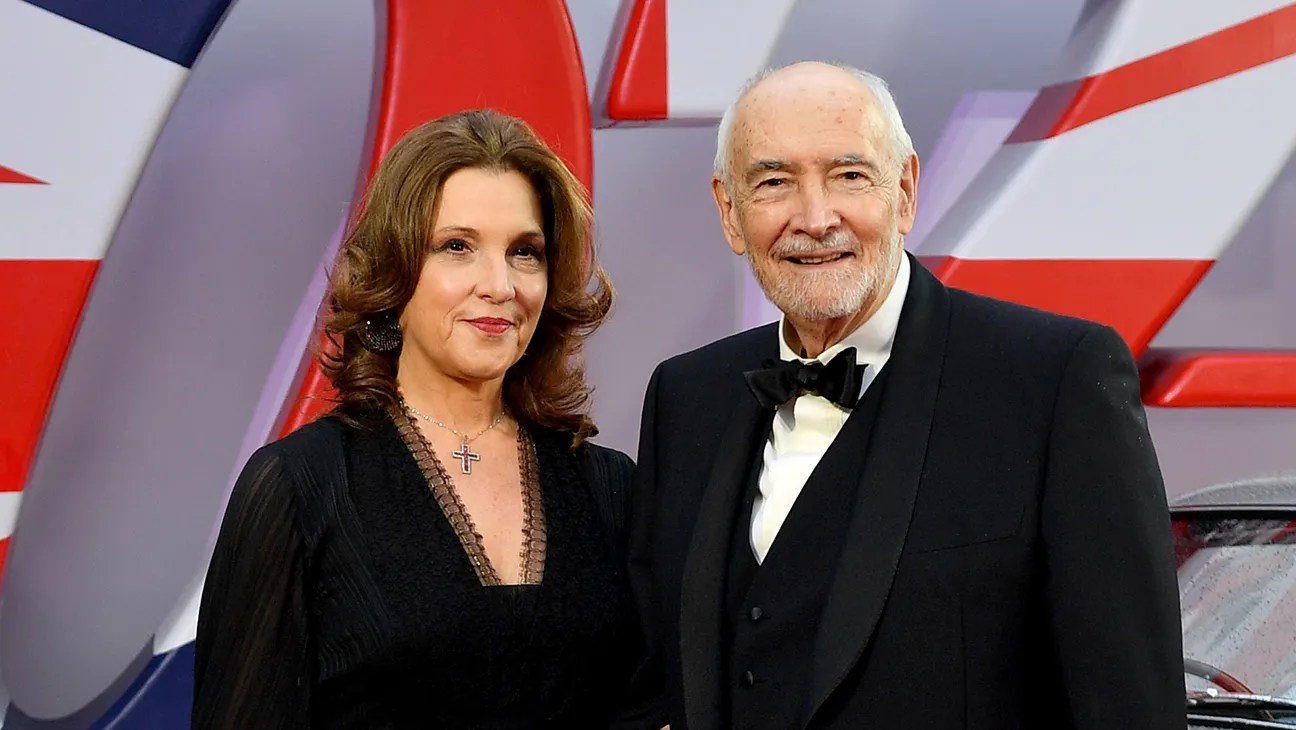
The franchise itself has evolved as well. Bond has outlived Fleming, adapted to six actors, and now enters a new era beyond the Broccoli family’s six decades of creative stewardship. The institutions that first defined Bond have changed dramatically, yet the character continues to evolve because culture itself continues to evolve.
Longevity alone, however, does not explain Bond’s significance.
James Bond as a Cultural Language
This is why I believe James Bond matters in 2026. Bond is no longer simply a fictional spy or even a successful film franchise. He has become a cultural language. Like any language, it is learned, shared, adapted, and spoken by others.
Languages are more than words. They are systems of shared meaning with recognizable vocabularies, structures, and conventions. We know when someone is speaking French or Japanese because we recognize familiar patterns of sound, rhythm, and grammar. James Bond functions in much the same way.
We immediately recognize Bond’s visual language through the tailored tuxedo, the Aston Martin, the gun barrel sequence, glamorous international locations, luxury brands, and meticulously choreographed action. We hear Bond’s audio language in Monty Norman’s iconic theme, the sweeping title songs, and the unmistakable cadence of “Bond. James Bond.” We understand Bond’s narrative language through familiar conventions: the pre-title sequence, the mission briefing, the gadgets, beautiful and glamorous women, the charismatic villain, the loyal ally, the globe-spanning investigation, and the spectacular final confrontation.
These conventions have become so deeply embedded in popular culture that they no longer belong exclusively to James Bond. They have become the vocabulary through which modern espionage stories are told.
More importantly, they have become a language that audiences speak fluently. We instantly recognize when a film, television series, video game, or advertisement is “doing Bond,” even when the character himself is nowhere to be found. That level of cultural recognition extends beyond influence. It reflects a shared understanding of a storytelling grammar that has become embedded within the spy genre itself.
Speaking Bond
Like any language, Bond can be spoken with different accents.
Some spy franchises embrace Bond’s elegance, glamour, spectacle, and globe-trotting adventures. Others deliberately reject those qualities in favour of realism, moral ambiguity, or psychological complexity. Still others parody Bond’s conventions while simultaneously celebrating them. Yet all of these approaches acknowledge Bond’s centrality.
Jason Bourne derives much of its identity by rejecting Bond’s sophistication and reliance on gadgets. Kingsman amplifies Bond’s style into gleeful excess, while Spy playfully satirizes the genre by exposing and subverting many of its familiar conventions. Mission: Impossible increasingly embraces the globe-spanning spectacle, elaborate action sequences, and impossible set pieces long associated with Bond. Other series, from Jack Ryan to Citadel and Slow Horses, similarly position themselves within a genre whose conventions Bond helped establish.

Whether they imitate Bond, parody Bond, or deliberately distance themselves from Bond, they are all speaking the same cultural language.
Beyond the Spy Genre
James Bond’s influence extends well beyond espionage. His impact can be seen in fashion, music, advertising, luxury branding, tourism, technology, and video games. Bond has become shorthand for a particular way of imagining sophistication, heroism, adventure, and global power. Even people who have never seen a Bond film recognize the imagery, sounds, and conventions associated with the franchise.

This is what distinguishes cultural influence from cultural language. Bond is no longer confined to his own stories. He has become part of the broader vocabulary through which popular culture imagines espionage.
Has Bond Become Canon?
As someone who has spent much of my career studying James Bond, I have often found myself thinking about another enduring cultural figure: Shakespeare. At first glance, the comparison may seem surprising. Shakespeare and Bond belong to different historical periods, different media, and different cultural traditions. Yet what interests me is not the comparison between the works themselves, but what happens when a creative work transcends its original form.
Shakespeare’s influence extends well beyond the plays themselves. His characters, stories, and language have become part of our shared cultural vocabulary. People recognize Romeo and Juliet, Hamlet, or the phrase “To be or not to be” without necessarily having read Shakespeare. His influence can be found across literature, theatre, film, television, and everyday speech.
I wonder whether James Bond is undergoing a similar transformation.
People recognize the tuxedo, the martini, the Aston Martin, and the phrase “Bond. James Bond.” They understand Bond references in films, television, advertising, video games, and countless parodies without having seen every Bond film—or even any Bond film. Bond has become part of our cultural literacy.
That raises an interesting question. At what point does a popular cultural figure move beyond entertainment and become part of the cultural canon? Canonization is not determined solely by critical acclaim; it is also shaped by enduring influence. By that measure, Bond has already left an extraordinary mark on global culture, inspiring generations of storytellers while becoming the defining reference point for one of cinema’s most enduring genres.
Perhaps the more interesting question is not whether Bond deserves a place in the cultural canon. Perhaps it is whether he has already entered it.
Why Bond Still Matters
People still ask me why I continue studying James Bond.The answer has never really been about one fictional spy.
I study Bond because Bond reveals how culture evolves. He reflects changing ideas about heroism, technology, politics, gender, power, identity, and the stories societies choose to tell about themselves. More importantly, he demonstrates how cultural icons survive—not by remaining unchanged, but by continually adapting to new audiences, new technologies, and new historical moments.
The question in 2026 is not simply who will become the next James Bond. It is why, more than seventy years after Ian Fleming first introduced 007, we are still speaking his language—a language so deeply embedded in popular culture that we already know its grammar long before we know who will speak it next. That may be Bond’s greatest achievement. He no longer belongs solely to Ian Fleming or to the franchise itself. He has become part of our shared cultural vocabulary.

