Dr. Lisa Funnell
Award-Winning Author | Media Educator & Consultant | “Dr 007” | Director of Communications, G-Woman Media

Ableism in the Bond Franchise: Why the Legacy Continues
By Dr. Lisa Funnell

For decades, disability activism has existed at the margins of broader social justice movements. Even within institutions, accessibility is frequently siloed — treated as an add-on rather than a core pillar of equity, diversity, and inclusion (EDI) initiatives. This separation has shaped not only our social and political landscapes, but also our cultural ones. Nowhere is this more visible than in popular film.
Blockbuster cinema plays a powerful role in shaping how we understand identity, power, and “normalcy.” And while many viewers dismiss franchises like James Bond as “just entertainment,” the messages embedded within them especially around disability are far from harmless. In fact, they frequently reinforce ableist tropes that have circulated for over a century.
One of the most persistent of these tropes is the use of facial scarring and other visible differences to signify villainy. As the Craig era Bond films (2006-21) demonstrate, this practice is not only alive and well, but accelerating at a moment when disability advocates are calling loudly for change.
Why Disability Representation in Film Falls Short
When disability appears on screen, it is almost always shaped—and played—by people without disabilities. As scholar Elisa Shaholli notes, this gives nondisabled creators the power to define the role; while disability may be visible in the frame it is erased from the production process.
This absence of lived experience contributes to harmful patterns:
- Disabilities presented as symbols rather than realities
- Characters defined by their impairments rather than their identities
- Facial differences coded as evidence of moral corruption
These tropes are not new. As early as the silent film era, villains were marked by scars, burns, alopecia, albinism, and other dermatologic features meant to evoke unease and “otherness.” As Paul Longmore argues, such depictions position disabled characters as less human and, at times, literally monstrous.
These old ideas continue to shape contemporary storytelling. And franchises with global reach, like James Bond, carry particular weight in reinforcing them.
Bond’s History of Villainizing Facial Difference
The Bond franchise has always relied on physical contrast to build its hero. Bond’s masculinity is elevated by juxtaposing his “ideal” body against that of adversaries who are framed as freakish, excessive, or impaired.

Before the 1990s, facial scarring was rare in Bond films. Blofeld’s scar in You Only Live Twice (1967) is the standout example. But with the Brosnan era—and even more so with the Craig era—facial difference becomes a core shorthand for villainy.
Across the Craig films, this trope is used repeatedly:


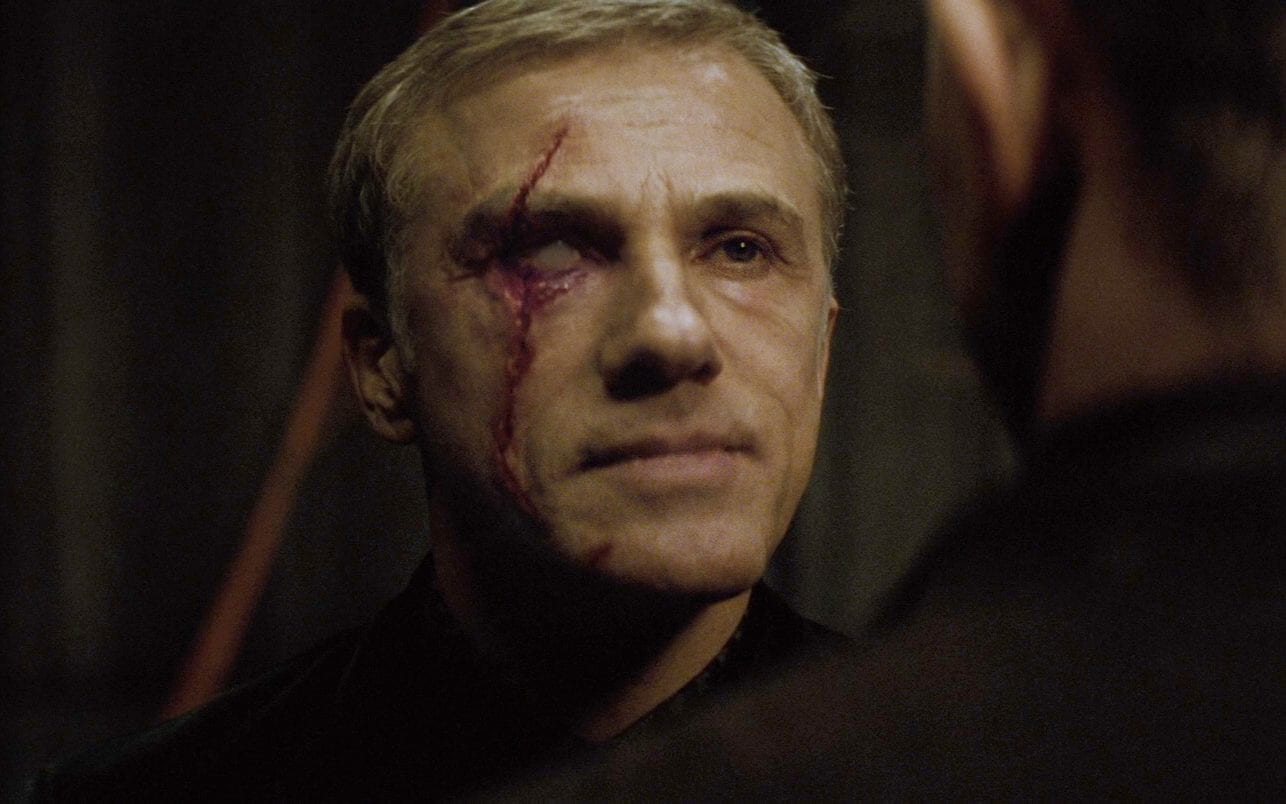


This is not incidental. These creative choices signal a deeper problem: Ableism has become embedded in the visual language of the Bond brand.
When Tradition Becomes a Problem
Some defenders of the franchise argue that scars are simply an homage to Bond history. Others claim that visible differences efficiently communicate a backstory in a film with limited time.
But these justifications ignore three critical realities:
1. Audiences are harmed by this shorthand.
Campaigns like #IAmNotYourVillain—supported by UK charity Changing Faces—document how cinematic scar tropes fuel real-world discrimination.
2. Industry leaders have already acknowledged the problem.
In 2018, the British Film Institute (BFI) committed to no longer funding films that use facial difference as visual shorthand for villainy.
3. Bond has continued anyway.
Despite global conversations about disability representation, No Time To Die (2021) features three villains with facial scarring—its highest count yet.
At that point, it is no longer coincidence. It is a pattern.
Why This Matters for Bond’s Future
The Craig era is often celebrated for its “progress” including the casting of Black actors as Felix Leiter and Moneypenny, or the brief re-assignment of the 007 number to Lashana Lynch.
But representation gains in gender and race cannot be used to offset ableist practices. A franchise cannot be progressive only when easy and where convenient.
What’s more, these creative decisions reflect the values of the core team shaping Bond storytelling for over two decades—producers Barbara Broccoli and Michael G. Wilson, long-time screenwriters Neal Purvis and Robert Wade, and directors including Sam Mendes.
The Bond Franchise Has a Choice to Make
As Bond enters another transition—with a new lead and a new creative vision—the question is not simply who the next 007 will be. The deeper question is:
Will the franchise continue relying on outdated, ableist narrative devices?
Or will it evolve alongside the audiences who have been calling for change?
Bond has survived for over 60 years because it adapts to shifting cultural landscapes. But progression requires more than casting choices or gender-politics updates. It requires rethinking how stories are told and who gets harmed in the storytelling process.
The old Bond is dead. It’s time for the old representational practices to die with him.
If the next era of Bond wants to remain relevant, compelling, and socially conscious, then the franchise must finally retire the trope of scarring-as-villainy and embrace a world where disability representation is neither monstrous nor metaphorical, but fully human.
 Dr. Lisa Funnell